Traditional leadership training rarely produces leaders capable of sustaining performance through Lean transformation. Lasting change occurs only when leaders internalize Lean principles and consistently apply them in how they think, decide, and lead. Until leadership behavior changes, Lean remains a set of tools—not an operating system—and performance gains will not endure.
Is Leadership Capability Limiting Execution?

Strategy is clear—but execution is inconsistent.

Managers are technically strong but weak at leading people.

Accountability varies across teams or locations.

Performance management feels bureaucratic, not developmental.

High performers are disengaged or leaving.

Leaders avoid difficult conversations or problem ownership.

Culture varies widely across the organization.

HR processes exist—but they aren't changing behavior.
Strategy doesn’t fail on paper. It fails in leadership behavior.
We build leaders who drive performance every day.
Lean Focus builds leadership capability by changing how leaders think, act, and lead—every day.
When leaders at every level consistently practice the right behaviors, culture shifts naturally and performance sustains. The goal is not inspiration or awareness, but leadership behaviors that reinforce improvement, accountability, and respect through daily execution. Within the Leadership Practice, three principles form the foundation for transformation: Leaders Teach, Go See For Yourself, and Respect for People. Together, they move leaders beyond managing outcomes to shaping the conditions where continuous improvement and sustainable performance can thrive.


Principle 1: Leaders Teach builds organizational capability by shifting leadership from directing work to developing people.
Instead of hoarding knowledge or providing answers, leaders strengthen problem-solving by asking the right questions and coaching teams closest to the work. Over time, capability compounds—creating a workforce that identifies, solves, and prevents problems independently. This is the foundation of a culture that improves continuously without relying on management heroics.
Principle 2: Go See For Yourself replaces assumptions with firsthand understanding.
Rather than relying solely on reports and dashboards, leaders engage directly where work happens to see problems, constraints, and opportunities as they truly exist. Decisions improve because they’re grounded in fact, not abstraction. Just as importantly, leadership presence builds trust and models the curiosity required for continuous improvement.

Principle 3: Respect for People unlocks engagement by treating employees as problem solvers, not resources to be managed.
When leaders value frontline insight, create psychological safety, and involve people in improving their own work, engagement rises and resistance falls. The result is a workforce that takes ownership of performance and actively contributes to improvement. Sustainable Lean cultures are built through participation—and participation follows respect.

The Lean Focus Business System™ (LBS™) turns leadership principles into execution.
Within the Leadership Practice, Leaders Teach, Go See Yourself, and Respect for People are embedded through the proven tools and disciplines of the Lean Focus Business System™. Applied side-by-side with seasoned, senior-level practitioners, LBS™ shapes how leaders think, behave, and lead—building the capability, accountability, and trust required to sustain performance across the enterprise, regardless of industry or geography.
Sustainable performance depends on how
leaders behave—every day.
A conversation with Lean Focus is a working session, not a pitch. Our senior-level LBS™ practitioners will show how the Lean Focus Business System™ shapes leadership behaviors that build capability, accountability, and trust—creating a culture that sustains performance long after the engagement ends.
Industry Experience of Our Leadership Practice
EVS
AUTO COMPONENTS
HOME FURNISHINGS
BIOPHARMACEUTICALS
AEROSPACE & DEFENSE
DIAGNOSTIC EQUIPMENT
PERFORMANCE MATERIALS
TRANSPORT & LOGISTICS
GENOMICS & PRECISION MEDICINE
INDUSTRIAL MACHINERY
IMPLANTABLE DEVICES
PATIENT MONITORING
LIFE SCIENCE TOOLS
BUILDING MATERIALS
TEST & MEASUREMENT
SECURITY SYSTEMS
HVAC SYSTEMS
& MORE
Organizations We’ve Helped To Develop Leaders



Our Leadership Practice Regional Leaders
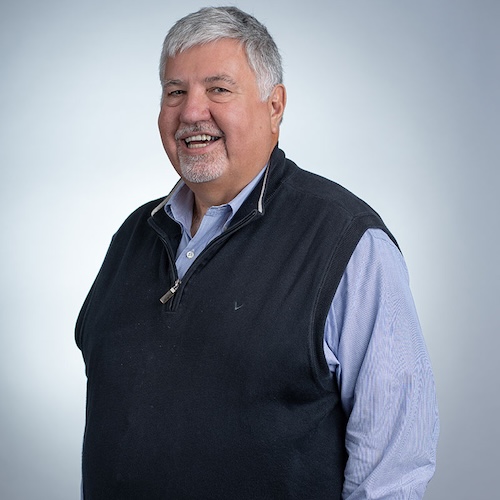
About Dennis
Dennis has over 37 years of experience in Human Resource Management with most of his career leading large HR organizations at Danaher, Fortive, Kollmorgen, and Cooper Industries including Group Vice President for the Industrial Technologies segment ($3B+ and 50 global locations) at Danaher. Following the spin-off of Fortive from Danaher, he led Global Talent Management & Leadership Development at Fortive. A hands-on leader, Dennis is comfortable on the shop floor working with employees or with C-Suite executives creating Human Capital Strategy & Deployment. He’s passionate about improving employee involvement to drive Lean processes and achieve real results. He holds a BS in Marketing and an MS in Management (HR focus) from Virginia Tech.
A hands-on leader, Dennis is comfortable on the shop floor working with employees or with C-Suite executives creating human capital strategy and deployment. He’s passionate about improving employee involvement to drive Lean processes and achieve real results.
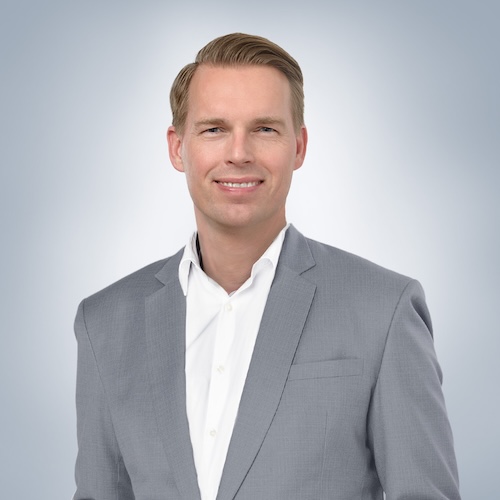
About Manuel
Manuel has over 20 years of experience in Human Resource Management and Organizational Development. He has initially provided support for lean business transformations at all levels as a HR Consultant and later by leading customer-focused Talent and HR organizations in multi-national companies (up to $2.2B and 40+ locations). His assignments include various Talent leader roles at Danaher´s Water Quality Business and Head of HR positions in Pharma and Biotech. As an entrepreneur he has (co-)founded start-up businesses and professional networks. He is passionate about applying lean and agile thinking to build, improve and sustain impactful HR and talent practices, placing and developing key talent to drive the transformation journey, and building a lean leadership culture at all levels of the organization. Manuel holds a MBA (Diplom-Kaufmann) and Ph.D. in Business Administration (HR focus) from Essen University.

About Michael
Michael is the CEO of Lean Focus Nordic, bringing over 25 years of leadership experience. His career includes ~18 years at Danaher Corporation, where he held multiple executive roles, including General Manager/Managing Director Dentistry and Biotech businesses, as well as several VP Operations & Supply Chain and VP of Lean Business Transformation. In his role as Danaher Corporate Director, he was responsible for Danaher Business System implementation in EU. Most recently, he led Operations & Supply Chain of a $1B acute care diagnostics business, transforming it into one of Danaher’s most Lean-mature organizations.
An expert in driving transformational change, Michael specializes in implementing Lean practices and applying Lean business systems in large-scale organizations to enhance quality, delivery, innovation speed, and cost efficiency. He has successfully led cross-functional Lean transformations across diverse industries, cultivating high-performing, problem-solving cultures on a global scale.
Michael is renowned for driving radical business transformations and delivering impactful results. He excels in building enduring cultures of Continuous Improvement, anchored in collaboration, empowerment, and mutual respect.
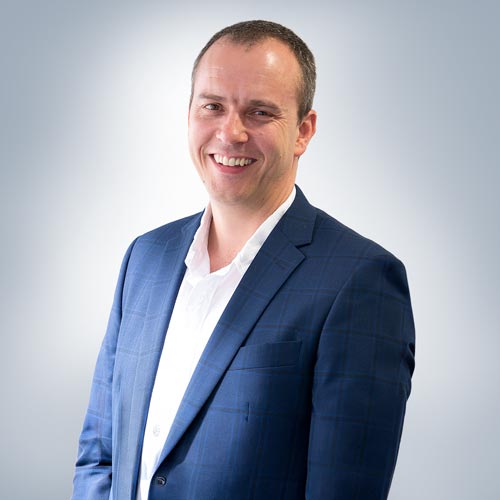
About Tim
Tim Niewand is a senior operations and business transformation leader with nearly 15 years of global experience driving Lean transformation, strategy deployment, and commercial and operational excellence across diverse and complex environments. A hands-on leader, he embodies true Gemba leadership—personally facilitating Kaizens and leading cross-functional transformation initiatives that deliver measurable, EBITDA-driven results.
Trained by former Toyota plant managers and Danaher Business System leaders, Tim has facilitated more than 80 Kaizen events across 25 companies in 10 countries. He has built a reputation for translating strategy into execution—aligning teams, simplifying processes, and eliminating operational friction to unlock performance.
During his tenure with Danaher, Fortive, and Vontier, Tim held multiple senior leadership roles including Business System Director, Head of Supply Chain, and Head of Marketing. As a Business System Director, he played a central role in driving policy deployment, leading global transformation initiatives, and coaching executive leadership teams to embed Lean thinking across operations, commercial, and functional organizations.
In an operational leadership capacity, he led end-to-end supply chain transformations, delivering significant improvements in productivity, margin, and working capital while simultaneously improving safety, quality, and employee engagement. He has also led M&A integrations, establishing governance, execution cadence, and cross-functional alignment to accelerate value capture.
He serves as Board Vice Chair of Cornerstone College and has previously held Non-Executive Director roles within aged care organizations, bringing governance, financial oversight, and strategic guidance.
Tim holds a Senior Executive MBA from Melbourne Business School, a Bachelor of Engineering in Aerospace (First Class Honours), and a Bachelor of Applied Science in Aviation (Distinction) from RMIT University. He is also a Graduate of the Australian Institute of Company Directors (GAICD).
Contact Our
Leadership Practice Today.
Leadership Practice Case Study
Innovative Materials and Technology Manufacturer Builds Leadership Capability to Sustain Lean Transformation
$5.3 B
Annual Revenue
13,000+
Associates
1. Challenge
A global leader in innovative materials and advanced manufacturing was preparing for one of the most consequential structural shifts in its history.
For decades, the company had operated through a highly centralized structure that supported scale, engineering excellence, and disciplined execution. But changing market dynamics—and the need for greater customer responsiveness—required a different model.
Leadership made the strategic decision to transition the enterprise into a decentralized Operating Company (OpCo) structure, placing accountability, decision-making authority, and innovation closer to customers and markets.
The strategy was sound.
The risk was leadership readiness.
Transforming organizational charts does not transform organizations. Leaders must have the capability to operate differently—or the structure simply collapses back into old habits.
Senior leadership recognized that thousands of leaders and managers would suddenly be expected to:
• Operate with greater autonomy and accountability
• Lead continuous improvement within their businesses
• Develop stronger teams and decision-making discipline
• Guide associates through significant organizational change
At the same time, the company’s unique culture—rooted in associate ownership, deep engagement, and relentless innovation—had to be preserved.
Without a disciplined process to align organizational structure, leadership capability, and talent deployment to strategy, the transformation risked creating confusion rather than performance.
The leadership team needed a systematic way to ensure the organization was truly ready to execute the strategy
2. Opportunity
The transformation presented a rare opportunity to strengthen leadership capability across the enterprise while preserving the culture that made the company exceptional.
Rather than approaching leadership development as a traditional training initiative, the goal was to install a leadership infrastructure that would allow the organization to sustain Lean behaviors long after the initial transformation.
The company partnered with the Lean Focus Leadership Practice to deploy a core tool within the Lean Focus Business System™:
The Organization Readiness Process (ORP).
The ORP is a structured leadership and talent management process that links strategy directly to organizational structure, governance, workforce capability, and leadership deployment.
At its core, the process forces leadership teams to confront four fundamental questions:
• Do we have the right organizational structure and governance to execute the strategy?
• Do we have the workforce and competencies required to deliver the strategy?
• Do we have the right leaders in the right roles to execute the strategy?
• Do we have a fully engaged organization capable of delivering results?
For organizations undertaking major transformation, these questions determine whether strategy becomes reality—or remains aspiration.
Leadership Practice Client Testimonials
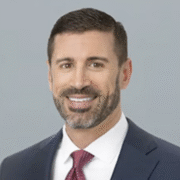
“Achieving improved sustainable results starts with how a leadership team leads. I wanted an org design process that allowed our leaders to internalize lean principles, in particular, and see how they can apply them in everything we do. We chose Lean Focus as our partner because they had the expertise to work with an organization like ours. We wanted proven process-oriented resources with actual hands-on experience facilitating a leadership team and driving significant organization redesign. As a result, with pre-planning and a 5-day hands-on ELT event led by Lean Focus, our leadership team created and executed on a new organization structure. The sustained effort reduced G&A cost significantly, developing the foundation for a lean culture with engaged employees and better alignment with our customers.”
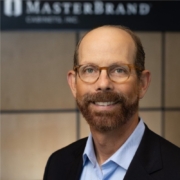
“Lean is not a magic wand; it doesn’t happen overnight. As a leader, you have to be on the front line with your team learning the tools, going to the debriefs of the events you’re doing. It is really critical that you’re involved so that people can see that you’re there, and that’s leading from the front. Lean Focus closely worked with our leaders to develop that mindset, in order to build and then sustain performance across the company.”
Start A Conversation With Our Leadership Practice
"*" indicates required fields
Download our Leadership
Practice PDF Now
Lean Focus
North America
P: +1 (630) 800-8519
E: [email protected]
Lean Focus
Europe
P: +49 173 2505762
E: [email protected]
Lean Focus
Nordic
P: +45 4030 3080
E: [email protected]
Lean Focus
Asia Pacific
P: +61 458 967 510
E: [email protected]

International Phone Number: +1 (630) 800-8519
© Lean Focus, LLC | All Rights Reserved
Privacy & Terms | Your Privacy Choices
Marketing Agency: Pop-Dot
Social

Podcast