Persistent disruptions in supply continuity, supplier quality, and cost signal that traditional supply chain management is no longer enough. Lean Focus’ Supply Chain Practice replaces reactive management with disciplined execution—building resilience, reliability, and cost control through the practical application of proven Lean principles.
Is Your Procurement Function Leaving Money On The Table?

Material costs keep rising, but you lack negotiating leverage.

Supplier performance is inconsistent—late, short, or quality issues.

Buyers spend their time expediting instead of negotiating.

You don't know where your largest cost reduction opportunities are.

Too many suppliers, contracts, and price variability.

Supply disruptions force constant last-minute decisions.

Procurement is viewed as transactional—not strategic.

You lack visibility into supplier risk and concentration.
Most organizations treat procurement as a purchasing function. We turn it into a strategic lever for immediate cost reduction and long-term supply stability.
Lean Focus applies a focused set of Lean principles to redesign supply chain performance.
Rather than relying on forecasts, excess inventory, and functional silos, Lean thinking reshapes how materials and information flow across the enterprise—eliminating waste, creating flow, and building the management systems required for resilient, reliable results. Within the Supply Chain Practice, three principles form the foundation for transformation: Value Stream Thinking, Pull Systems, and Customer Value.


Principle 1: Value Stream Thinking aligns the entire supply chain as one integrated system—not a collection of disconnected functions.
By viewing material and information flow end to end, organizations surface the hidden waste created by handoffs, delays, and siloed priorities. Teams shift from optimizing local metrics to improving total performance—driving meaningful reductions in lead time, cost, and operational friction.
Principle 2: Pull Systems synchronize supply with actual demand—rather than relying on forecast-driven push.
Forecast-driven, push-based supply chains introduce inventory, obsolescence, and cash constraints while still struggling to meet real customer needs. Pull Systems invert this model. Production and procurement are triggered by actual demand signals, not speculative forecasts. Materials flow only when needed, in the quantities needed, stabilizing supply while shortening lead times and reducing inventory exposure. The result is a supply chain that is responsive by design—efficient, predictable, and resilient to demand variability.

Principle 3: Customer Value aligns supply chain decisions to what actually matters to customers—not internal efficiency metrics.
By prioritizing service reliability, quality, lead time, and total cost as experienced externally, organizations make better trade-offs and focus improvement where it counts. The result is higher service levels delivered with less complexity and lower total cost.

The Lean Focus Business System™ (LBS™) turns supply chain principles into execution.
Within the Supply Chain Practice, Value Stream Thinking, Pull Systems, and Customer Value are operationalized through the proven tools and disciplines embedded in the Lean Focus Business System™. Applied side-by-side with seasoned, senior-level practitioners, LBS™ enables organizations to redesign flow, synchronize supply to demand, and improve service, cost, and resilience—creating repeatable supply chain performance across industries and geographies.
Today’s supply chain challenges require a fundamentally different operating model.
Persistent issues in service, quality, cost, and reliability are rarely solved through incremental fixes or better forecasting alone. Lean Focus addresses these challenges at their root through the disciplined application of the Lean Focus Business System™ (LBS™)—building supply chains designed for resilience and performance. A conversation with our senior-level LBS™ practitioners is a working session, not a pitch. We’ll show how proven methods—rather than workforce reductions—improve lead time, supplier performance, cost, supply stability, and customer satisfaction in your specific operating environment.
Industry Experience of Our Supply Chain Practice
OIL & ENERGY
MACHINE TOOLS
MEDICAL DEVICES
BUILDING MATERIALS
AEROSPACE & DEFENSE
INDUSTRIAL MACHINERY
AUTOMOTIVE COMPONENTS
TRANSPORTATION MANAGEMENT
GENOMICS & PRECISION MEDICINE
HOME GOODS & FURNISHINGS
SEMICONDUCTOR EQUIPMENT
THIRD-PARTY LOGISTICS
AUTOMATION EQUIPMENT
LIFE SCIENCES TOOLS
TEST & MEASUREMENT
MATERIAL HANDLING
HVAC SYSTEMS
& MORE
Organizations We’ve Helped To Strengthen Supply Chains



Our Supply Chain Practice Regional Leaders

About Robert
With over 25 years of experience, Robert has consistently excelled as a Global Strategic Sourcing, Procurement, and Supply Chain Senior Executive. His extensive expertise lies in designing and implementing center-led procurement organizations within matrix structures. Robert has a proven track record of success in leading both direct and indirect commodity management teams, establishing low-cost country offices, and integrating E-Sourcing tools into multinational lean manufacturing environments. Recognized as a high-energy, results-oriented leader, he possesses a collaborative management style and a keen ability to build consensus.
Robert has spearheaded transformative initiatives within procurement, strategic sourcing, and supply chain functions at notable organizations such as Envista (a Danaher spin-off), Pall Corporation (a Danaher company), Gardner Denver Nash, Siemens Water Technology, Bucyrus, and Cincinnati Milacron. These efforts have resulted in significant cost reductions, improved cash flow, and reduced overall supply chain risk. His career highlights also include business unit management with P&L responsibility, as well as experience in market/product development and sales management.
Robert holds a Bachelor of Science degree in Mechanical Engineering Technology from the University of Cincinnati, as well as a Master of Business Administration with a concentration in Operations from Auburn University’s Harbert School of Business.
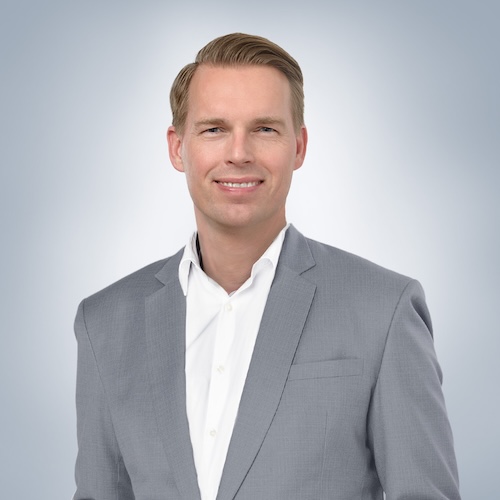
About Manuel
Manuel has over 20 years of experience in Human Resource Management and Organizational Development. He has initially provided support for lean business transformations at all levels as a HR Consultant and later by leading customer-focused Talent and HR organizations in multi-national companies (up to $2.2B and 40+ locations). His assignments include various Talent leader roles at Danaher´s Water Quality Business and Head of HR positions in Pharma and Biotech. As an entrepreneur he has (co-)founded start-up businesses and professional networks. He is passionate about applying lean and agile thinking to build, improve and sustain impactful HR and talent practices, placing and developing key talent to drive the transformation journey, and building a lean leadership culture at all levels of the organization. Manuel holds a MBA (Diplom-Kaufmann) and Ph.D. in Business Administration (HR focus) from Essen University.

About Michael
Michael is the CEO of Lean Focus Nordic, bringing over 25 years of leadership experience. His career includes ~18 years at Danaher Corporation, where he held multiple executive roles, including General Manager/Managing Director Dentistry and Biotech businesses, as well as several VP Operations & Supply Chain and VP of Lean Business Transformation. In his role as Danaher Corporate Director, he was responsible for Danaher Business System implementation in EU. Most recently, he led Operations & Supply Chain of a $1B acute care diagnostics business, transforming it into one of Danaher’s most Lean-mature organizations.
An expert in driving transformational change, Michael specializes in implementing Lean practices and applying Lean business systems in large-scale organizations to enhance quality, delivery, innovation speed, and cost efficiency. He has successfully led cross-functional Lean transformations across diverse industries, cultivating high-performing, problem-solving cultures on a global scale.
Michael is renowned for driving radical business transformations and delivering impactful results. He excels in building enduring cultures of Continuous Improvement, anchored in collaboration, empowerment, and mutual respect.

About Tim
Tim Niewand is a senior operations and business transformation leader with nearly 15 years of global experience driving Lean transformation, strategy deployment, and commercial and operational excellence across diverse and complex environments. A hands-on leader, he embodies true Gemba leadership—personally facilitating Kaizens and leading cross-functional transformation initiatives that deliver measurable, EBITDA-driven results.
Trained by former Toyota plant managers and Danaher Business System leaders, Tim has facilitated more than 80 Kaizen events across 25 companies in 10 countries. He has built a reputation for translating strategy into execution—aligning teams, simplifying processes, and eliminating operational friction to unlock performance.
During his tenure with Danaher, Fortive, and Vontier, Tim held multiple senior leadership roles including Business System Director, Head of Supply Chain, and Head of Marketing. As a Business System Director, he played a central role in driving policy deployment, leading global transformation initiatives, and coaching executive leadership teams to embed Lean thinking across operations, commercial, and functional organizations.
In an operational leadership capacity, he led end-to-end supply chain transformations, delivering significant improvements in productivity, margin, and working capital while simultaneously improving safety, quality, and employee engagement. He has also led M&A integrations, establishing governance, execution cadence, and cross-functional alignment to accelerate value capture.
He serves as Board Vice Chair of Cornerstone College and has previously held Non-Executive Director roles within aged care organizations, bringing governance, financial oversight, and strategic guidance.
Tim holds a Senior Executive MBA from Melbourne Business School, a Bachelor of Engineering in Aerospace (First Class Honours), and a Bachelor of Applied Science in Aviation (Distinction) from RMIT University. He is also a Graduate of the Australian Institute of Company Directors (GAICD).
Contact Our
Supply Chain Practice Today.
Supply Chain Practice Case Study
How Lean Focus Helped a Global MedTech Leader Cut Procurement Cycle Time by 53% and Unlock $25.9M in Savings
61
Countries
56k
Employees
1. Challenge
A global medical technology organization partnered with Lean Focus to accelerate value realization within its procurement function. The company had a strong pipeline of negotiation-driven savings, yet faced a familiar and frustrating dynamic: value was being identified, but it was not being realized at the speed the business required..
Fragmented processes, limited standardization, and unclear ownership were stalling momentum at every stage of the negotiation cycle within the complex, matrixed enterprise. Stakeholder alignment was inefficient, decision-making lagged, and projects routinely cycled back through preparation and approval steps before reaching closure. Cycle times were extending well beyond targets, delaying impact and tying up resources that could have been redeployed against the next wave of opportunities.
The result was an organization with the talent and technical capability to deliver, but a process structure that could not convert that capability into timely results. Leadership recognized that without a system-level redesign, the procurement engine would continue to underperform regardless of the insight or effort applied to any individual negotiation.
2. Opportunity
With more than $32.5M in identified opportunities sitting in the pipeline, the imperative was clear: build a faster, more disciplined system to execute and deliver results.
The diagnostic numbers told a stark story. Procurement negotiations averaged 316 days from start to finish against a target of fewer than 91 days, a performance gap of 225 days. Each project absorbed an average of 36 rework loops, and progress depended heavily on manual coordination and escalations.
At its core, the issue was not capability. It was process discipline, alignment, and execution. Root cause analysis pointed to a lack of standard work and operational rigor, poor prioritization of high-impact opportunities, inefficient communication and approval pathways, and underutilization of existing tools and systems. The primary opportunity was to accelerate procurement value through Value Stream Mapping, exposing waste in the workflow and redesigning the system to flow predictably from sourcing decision to realized savings.
Supply Chain Practice Client Testimonials
“Partnering with Lean Focus and their Supply Chain Practice has been instrumental in transforming our Procure-to-Pay (P2P) process. Their hands-on approach and deep expertise in the Lean tools that are a part of the Lean Focus Business System™ — including Value Stream Mapping (VSM), Transactional Process Improvement (TPI), Daily Management, and structured problem-solving — have helped us identify waste, streamline workflows, and significantly improve end-to-end process efficiency. Lean Focus didn’t just give us recommendations — they worked side by side with us to drive measurable results and sustainable change.”
“Lean Focus Supply Chain Practice provided hands-on leadership and the practical guidance of Lean principles that strengthened our organization. Their expertise the tools of the Lean Focus Business System™, along with their hands-on approach helped our teams drive measurable improvements, enhance collaboration, and build sustainable capability across the business.”

Start A Conversation With Our Supply Chain Practice
"*" indicates required fields
Download our Supply Chain
Practice PDF Now
Lean Focus
North America
P: +1 (630) 800-8519
E: [email protected]
Lean Focus
Europe
P: +49 173 2505762
E: [email protected]
Lean Focus
Nordic
P: +45 4030 3080
E: [email protected]
Lean Focus
Asia Pacific
P: +61 458 967 510
E: [email protected]

International Phone Number: +1 (630) 800-8519
© Lean Focus, LLC | All Rights Reserved
Privacy & Terms | Your Privacy Choices
Marketing Agency: Pop-Dot
Social

Podcast